The Sorrowful Mother Shrine near Bellevue has drawn pilgrims since 1850. Here’s its story and how to visit
A missionary priest built a small brick chapel on State Route 269 in 1850. After a 1912 fire, the shrine was rebuilt, and today it spans 153 acres with about 40 grottos.
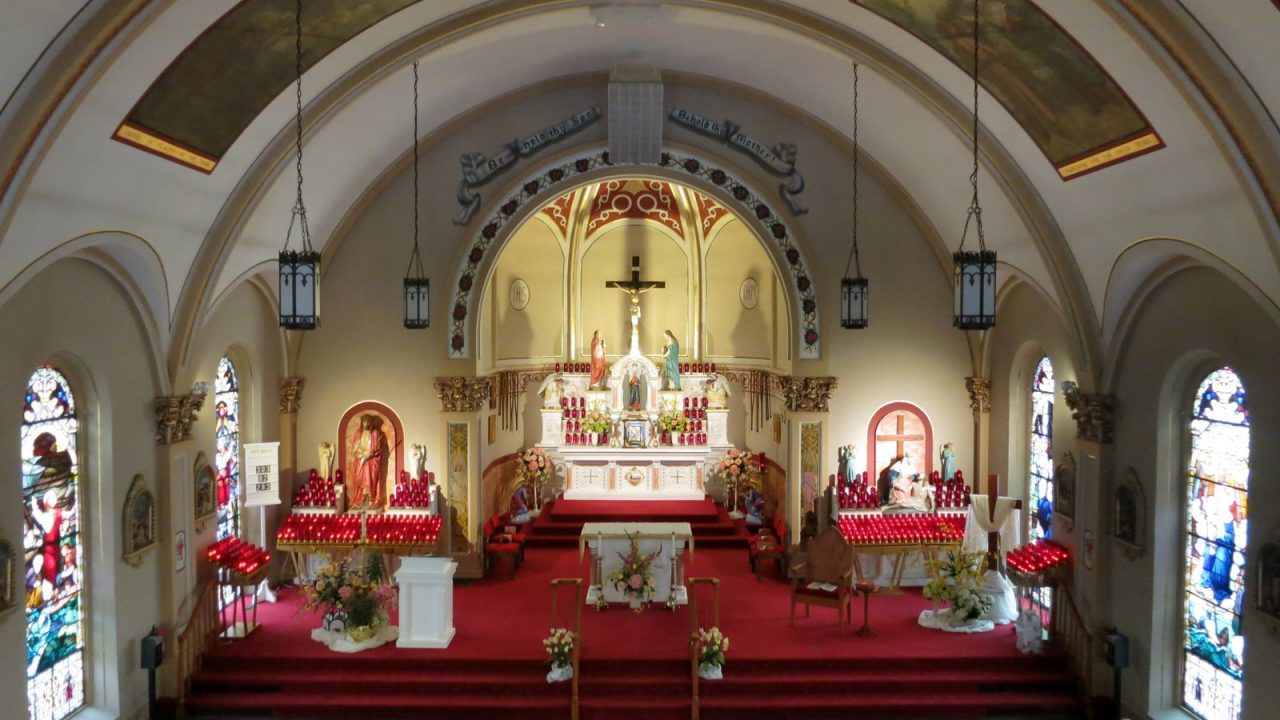

For 176 years, people have been driving, walking and riding buses to a patch of woods on State Route 269 outside Bellevue to pray at the Sorrowful Mother Shrine. It is one of the oldest Marian pilgrimage sites in the Midwest, and it is still run by the same order of priests that founded it in 1850.
The shrine’s own history describes it as “one of the oldest places of pilgrimage dedicated to the Blessed Mother in the Midwest and east of the Mississippi River.” Today it covers 153 acres of woods and lawns, with the Sorrowful Mother Chapel at the center and about 40 grottos along paved walkways, including the Stations of the Cross and replicas of the grotto at Lourdes and of the Holy Sepulcher.
A missionary’s chapel
The shrine began with one priest. Fr. Francis de Sales Brunner, a missionary of the Most Precious Blood, built a small red brick chapel on the site in 1850 in honor of the Sorrowful Mother, according to the shrine. He had come to the United States from Germany and Switzerland with other priests, and he credited Mary with guiding them safely. His Missionaries of the Precious Blood were first assigned to Peru, Ohio, and from there Brunner served German-speaking parishes across central and western Ohio, the shrine’s home page says.
The chapel became the hub of the missions and parishes Brunner founded for German Catholic settlers in northwest Ohio. A second, larger chapel replaced the first in 1870.
That chapel burned on Aug. 15, 1912, the feast of the Assumption. The fire destroyed the carved wooden statue of the Sorrowful Mother that Brunner had brought from Germany. Within two years the chapel was rebuilt with a new image of the Sorrowful Mother, stained glass windows, a bell tower and large ceiling paintings of the Seven Sorrows by Fr. Trost, a Precious Blood priest. That is the chapel pilgrims visit today.
From ethnic parishes across the region
The crowds grew through the 20th century, the shrine says, with groups coming especially from Catholic ethnic communities in Toledo, Cleveland, Columbus, Youngstown, Detroit, Pittsburgh and Windsor, Ontario. To handle them, the outdoor Pietà Chapel was built and dedicated in 1968. From May through September, weekend Masses move there.
The shrine marked its 175th anniversary, 1850 to 2025, with a celebration that opened with a Mass on Sept. 15, 2024. It is supported by free-will offerings, according to the shrine.
Visiting this season
Weekday Mass is at 11 a.m. Monday through Saturday in the Shrine Chapel, with a Saturday vigil Mass at 4 p.m. and Sunday Masses at 9 and 11 a.m., according to the Mass schedule. Confession is offered one hour before each scheduled Mass.
The shrine office and gift shop will be closed Thursday and Friday, Nov. 26 and 27, for Thanksgiving, the shrine says. The gift shop reopens Saturday, Nov. 28. Groups that want to plan a pilgrimage or a meal in the shrine cafeteria, which serves groups of 15 or more by reservation, can call the office at 419-483-3435.
The shrine is one of several places that made this crossroads more than a rail town. Our history of how old Bellevue grew and our guide to the four counties that meet at Bellevue fill in more of the area’s story. For another day trip with deep roots, see our piece on Victorian Christmas at the Wright Mansion in Historic Lyme Village. There is more on our Community page.