The Castalia Blue Hole: a roadside wonder that drew tourists for 75 years
The spring-fed pool northeast of Bellevue was a popular tourist stop from 1914 to 1990. It is now part of a state fish hatchery.
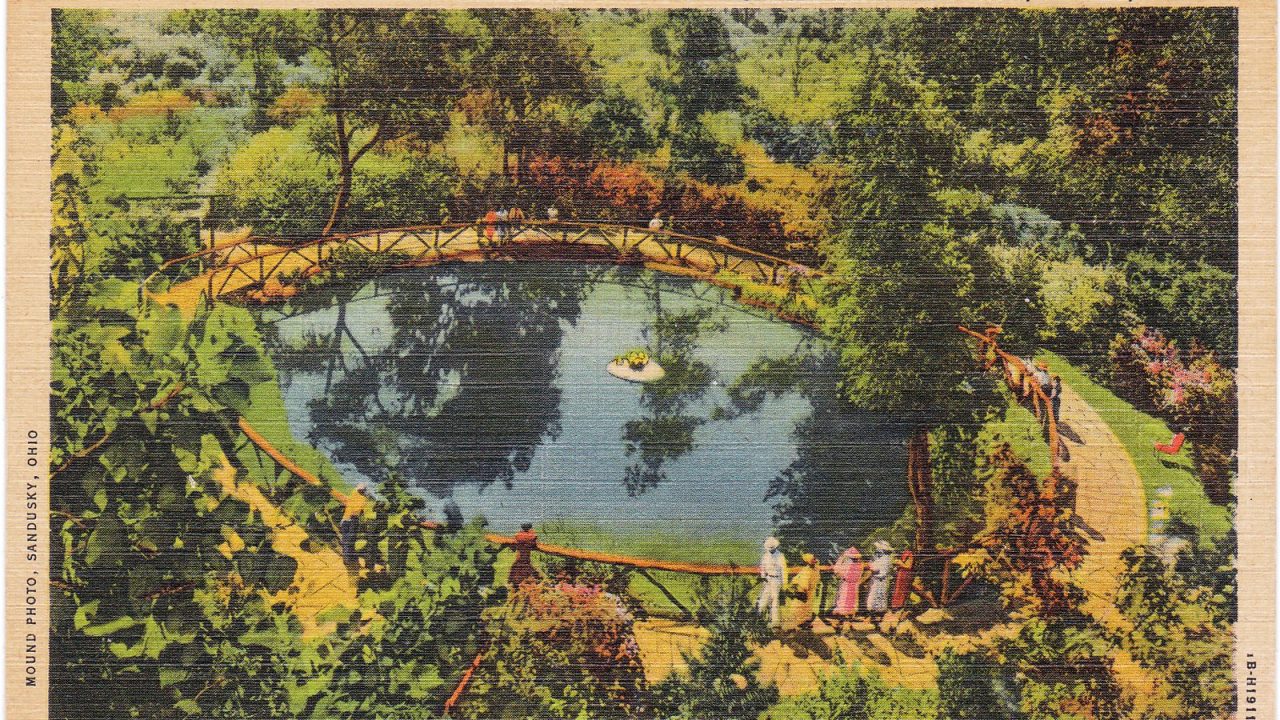
For generations of travelers on the way to Cedar Point or the lake, a stop at the Blue Hole in Castalia was part of the trip. The deep, clear pool, fed by an underground spring, stays the same temperature year-round and never freezes.
How it formed
The Blue Hole is a sinkhole in limestone, the same rock found in the caves and quarries around Bellevue and Marblehead. Groundwater moves through cracks in the rock and rises in springs around Castalia. The water is low in oxygen and rich in minerals, which gives the pool its color. Our story on Seneca Caverns explains more about the area’s karst geology.
A tourist attraction
The Blue Hole opened as a commercial attraction in 1914. Postcards from the mid-20th century show families looking into the water from a fence. Promoters claimed the pool was bottomless, which it is not, though its depth was hard to measure. The attraction closed to the public in 1990 after declining visits.
Today
The site is part of the Castalia State Fish Hatchery, run by the Ohio Department of Natural Resources Division of Wildlife, which raises rainbow trout in the cold spring water. A second blue hole on the hatchery grounds has been opened for public viewing on scheduled days. Check ODNR’s schedule before visiting.
Part of the lake trip
Castalia sits on the route from Bellevue to Sandusky, close to Cedar Point and the Lake Erie islands. For more on the region’s tourism, see our story on Lake Erie Shores & Islands. More history is in Community.